

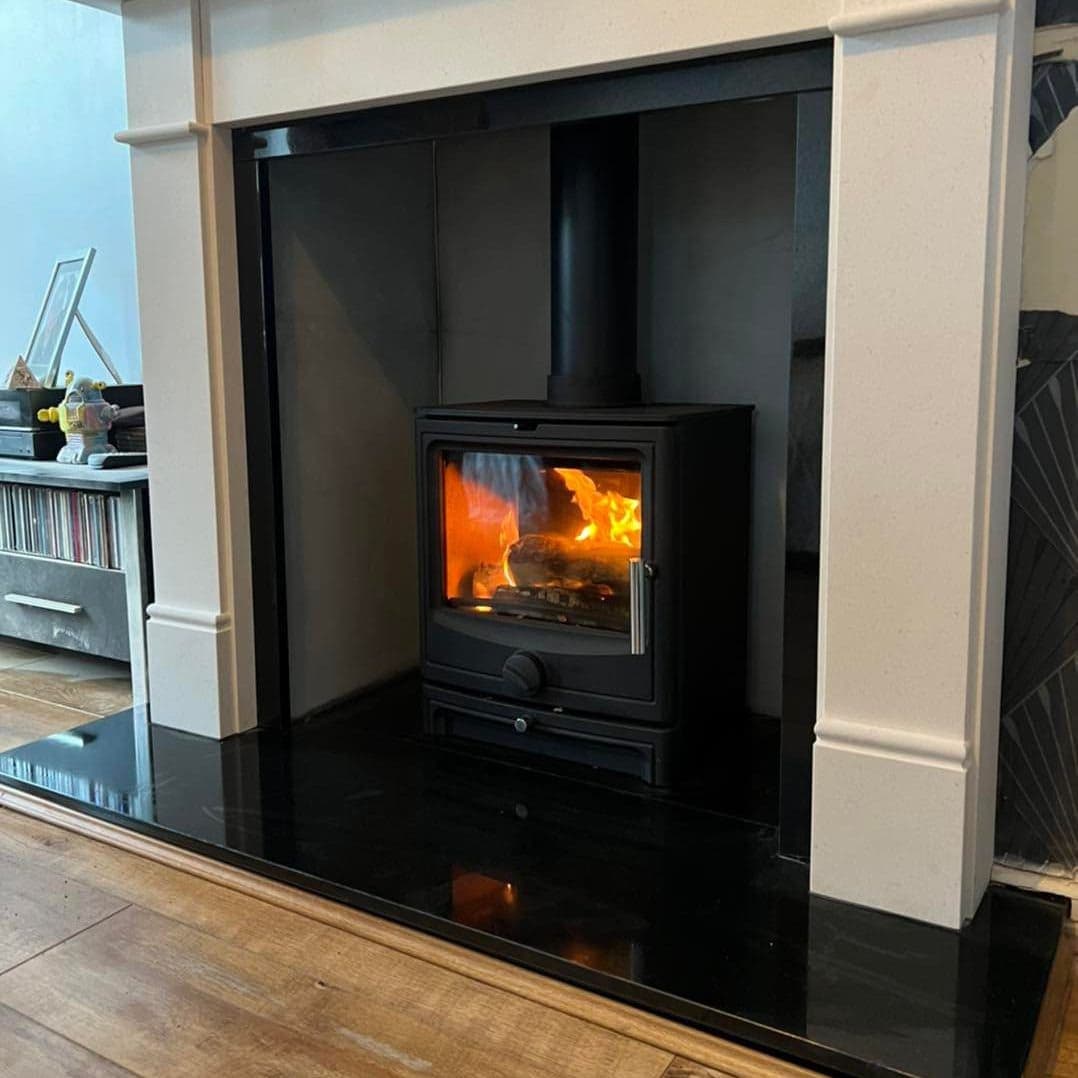
A little regular cleaning goes a long way with a wood burning stove. Keeping the glass clear, the ash pan under control and the baffle plate free of heavy soot helps your stove burn more efficiently, look better in the room and stay easier to inspect between professional services. None of it requires specialist tools, just the right method and a few sensible precautions.
In this guide, we will walk through how to clean each part of your log burner safely, how often to do it, and when a job is better left to a HETAS-registered engineer rather than tackled at home.
Before You Start: Safety Checklist
Cleaning a stove is straightforward, but it should only ever be done cold. Run through this quick checklist before you begin.
-
Make sure the stove has been out and cold for at least 24 hours before you start.
-
Wear gloves, since ash and soot can irritate the skin even when the stove itself is cold.
-
Lay down dust sheets or old newspaper around the hearth to catch any spills.
-
Open a window or door to ventilate the room while you work, particularly when cleaning ash.
-
Never use a household vacuum cleaner on ash unless it is specifically rated for fireplace or ash use, as fine particles can damage a standard vacuum and pose a fire risk if any embers remain.
How to Clean the Glass on Your Log Burner
Blackened glass is the most common complaint from stove owners, and thankfully one of the easiest to fix.
The damp newspaper and ash method: If your stove's handbook allows it, dampen a sheet of newspaper, dip it into fine, completely cold wood ash, and gently rub the cold glass. Avoid any grit or debris that could scratch it, and do not use this method on coated glass unless the manufacturer permits it. Wipe clean with a dry cloth afterwards.
Proprietary stove glass cleaner: If you prefer a ready-made solution, a specialist ceramic glass cleaner designed for stoves works well and is widely available from stove retailers and hardware shops. Always follow the manufacturer's instructions and apply to a cool surface.
What to avoid: Never use abrasive scourers, oven cleaner or general household glass cleaner on stove glass. These can scratch the surface or leave a residue that bakes on and discolours the next time the stove is lit.
If your glass blackens quickly after cleaning, this is often a sign that the wood being burned is too wet or that the air controls are being run too low. Burning kiln-dried or properly seasoned hardwood, and allowing enough air into the firebox, will keep the glass clearer for longer.
How to Remove and Dispose of Ash Safely
A shallow bed of ash, roughly 1 to 2 centimetres, actually helps insulate the firebox and makes it easier to get a fire going. However, ash should never be allowed to build up so far that it blocks the air vents or touches the bottom of the door.
-
Wait until the stove has been cold for at least 24 hours before removing ash.
-
Scoop ash into a metal ash container with a lid, never a plastic bag or bin, as embers can smoulder for much longer than expected.
-
Leave the covered metal container outside on a non-combustible surface, away from buildings and anything that can burn, for at least 48 hours. Check that the contents are completely cold before disposal; elapsed time alone does not guarantee that hidden embers are out.
-
Cooled, untreated wood ash can be added in small amounts to a garden compost heap or used as a mild soil conditioner. Ash from smokeless coal or treated wood should go in general waste instead.
Cleaning the Baffle Plate and Flue Way
The baffle plate is the metal or vermiculite plate that sits inside the top of the firebox, directing heat and smoke towards the flue rather than straight up and out. It collects a surprising amount of soot and, on some models, wood ash and debris from above.
Removing the baffle plate: Most baffle plates lift or slide out once cold, but the exact method varies between stove models. Check your manufacturer's handbook before attempting removal, since forcing an unfamiliar mechanism can crack a vermiculite plate.
Cleaning it: Once removed, brush away loose soot with a stiff, dry brush over a dust sheet. Avoid using water on vermiculite baffle plates, as they can absorb moisture and crack when the stove is next lit.
Checking for damage: Look for cracks, excessive warping or crumbling edges. A damaged baffle plate should be replaced rather than repaired, as it plays an important role in how efficiently and safely your stove burns.
If you are ever unsure about removing or refitting a baffle plate, this is a good moment to call in a professional rather than risk damaging the stove. Our engineers include a baffle plate check as standard during every stove maintenance visit.
Wiping Down the Exterior and Door Seals
Once the glass, ash and baffle plate are done, a quick wipe of the exterior finishes the job. Use a soft, dry or barely damp cloth on painted or enamel surfaces, and avoid household cleaning sprays, which can damage the paint finish over time.
While you are cleaning, take a moment to check the condition of the rope seal around the door. A seal that looks frayed, flattened or gappy will let excess air into the firebox, making the stove harder to control and less efficient. Seal life varies with use. Our stove maintenance service includes a seal check, and any replacement parts and costs are discussed with you before work goes ahead.
How Often Should You Clean vs Book a Professional Service
Light, regular cleaning and a full professional service serve two different purposes, and both matter.
Weekly or after every few burns: Clear excess ash and give the glass a quick clean if it has started to blacken.
Monthly through the burning season: A more thorough clean of the glass, ash pan and visible areas around the baffle.
Annually, ideally before the season starts: A full professional stove maintenance visit, covering the baffle plate, door seals, air controls and a proper inspection that goes beyond what is visible during routine cleaning.
Regular home cleaning keeps your stove looking good and burning well between visits, but it is not a substitute for a professional service, which catches wear and tear before it becomes a bigger problem.
When to Call in a Professional
Some issues are best left to a HETAS-registered engineer rather than tackled at home. Book a professional visit if you notice any of the following.
-
A cracked, warped or crumbling baffle plate.
-
A door seal that no longer holds the door firmly shut.
-
Glass that stays black no matter how it is cleaned, which can point to an air control or flue issue.
-
Any smell of smoke in the room when the stove is lit and the door is closed. Stop using the stove and arrange an inspection before using it again.
-
A stove that has not had a professional service in over a year.
Explore Our Additional Aftercare Services
Regular cleaning keeps your stove looking its best, but a professional service catches the things a home clean cannot. Take a look at our other aftercare services below:
Our HETAS-registered engineers carry out a full service covering door seals, glass, baffle plates and air controls across Essex, London and Kent. From £100.
A clean glass and firebox are only part of the picture. Regular chimney sweeping keeps the whole system, from firebox to flue, working safely. Fixed price of £80.
Firewood & Log Delivery (Essex)
Burning properly dried logs is one of the simplest ways to keep your glass clearer for longer. We deliver kiln-dried and seasoned hardwood logs across Essex, from £12.
Log Burner Cleaning FAQs
Can I use oven cleaner on my stove glass?
No. Oven cleaner and other abrasive household products are too harsh for stove glass and can scratch the surface or leave a residue that discolours when the stove is next lit. Stick to the damp newspaper and ash method or a proprietary stove glass cleaner.
How often should I clean the glass on my log burner?
Most owners find a quick clean every week or two during the burning season keeps the glass clear. If your glass blackens faster than this, check the moisture content of your wood and how far your air controls are open.
Is it safe to vacuum ash from a log burner?
Only with a vacuum specifically designed for ash and fireplace use. Standard household vacuums are not built to handle fine ash particles or the risk of residual heat, and using one can cause damage or, in rare cases, a fire.
Can I remove and clean the baffle plate myself?
In many cases, yes, though the method varies by stove model, so check your handbook first. If you are unsure, or the baffle plate feels stuck or fragile, it is safer to leave this to a professional during a stove maintenance visit.
Why does my stove glass turn black so quickly?
This is usually caused by burning wet or unseasoned wood, running the air controls too low, or a build-up of soot affecting the airwash system that keeps the glass clean. Switching to kiln-dried or seasoned hardwood often makes a noticeable difference.
Do I need to remove all the ash after every fire?
No, a shallow layer of ash actually helps insulate the firebox and makes relighting easier. Just make sure it never builds up high enough to block the air vents or reach the bottom of the door.
Book a Professional Stove Service
Regular cleaning keeps things looking good between visits, but a full professional service is the best way to keep your stove safe and performing at its best. Our HETAS-registered team covers Essex, South East London and Kent.
Book a Stove Maintenance Visit
Essex: 01702 780 888 · Kent & London: 01689 477 888